Read Lists
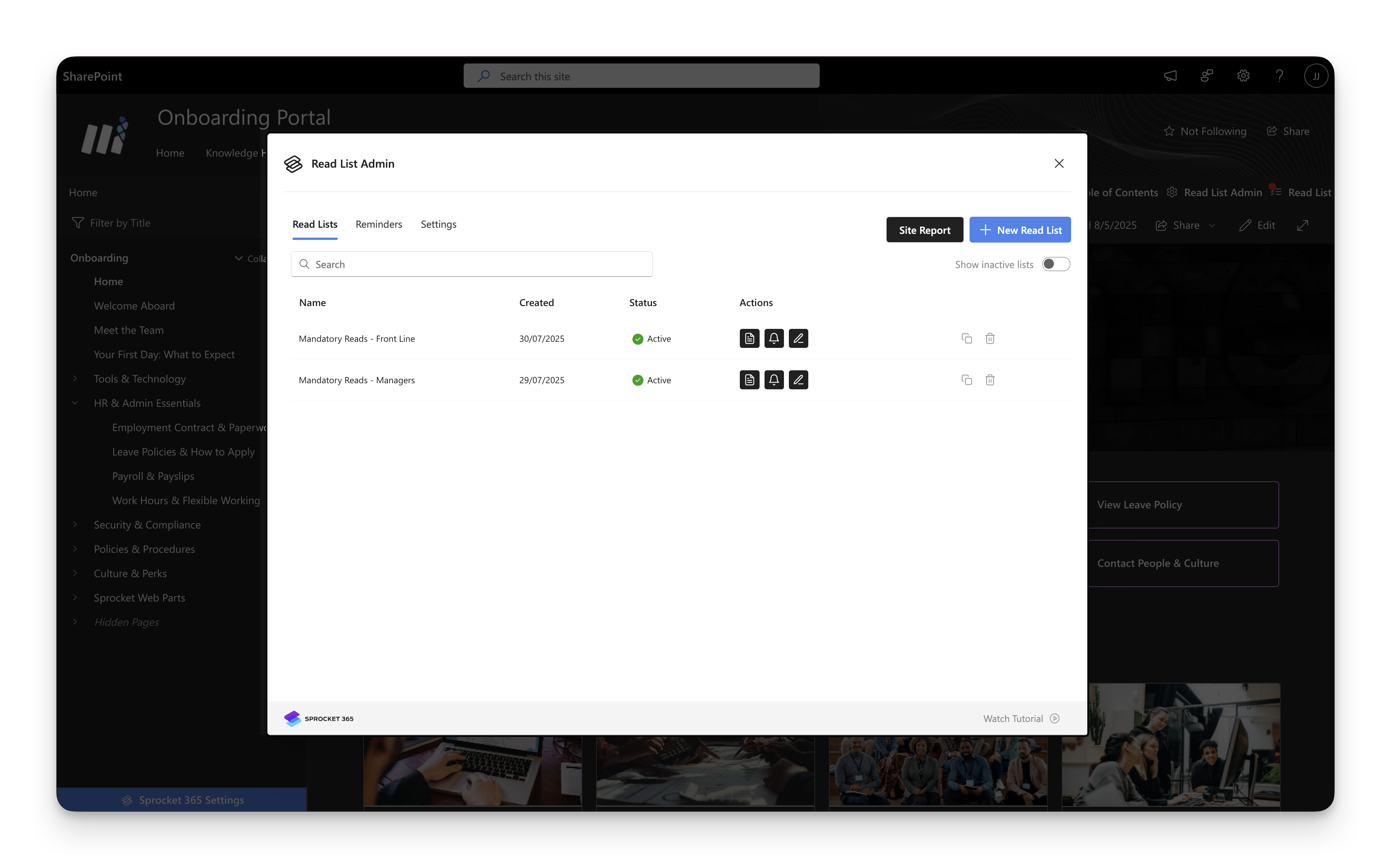
Read Lists help you assign required reading and track completion across your organisation. Use them for policies, procedures, safety updates, onboarding content, compliance material, and any other information where you need a clear record of who has read what.
Read Lists can include both SharePoint pages and files from document libraries. Users complete their assigned reading from Knowledge Hub pages or the Read Checklist web part.
Why Use Read Lists?
- Reliable compliance tracking: See who has read each required item and who still needs to complete it.
- Flexible reading assignments: Assign pages, news posts, documents, PDFs, videos, and other files from SharePoint document libraries.
- Audience targeting: Assign reading to selected users or Microsoft 365 groups.
- Completion reporting: Review completion by user or item and export reports for compliance records.
- Notifications and reminders: Notify users about assigned reading and schedule reminders for incomplete items.
Getting Started
Accessing Read Lists Admin
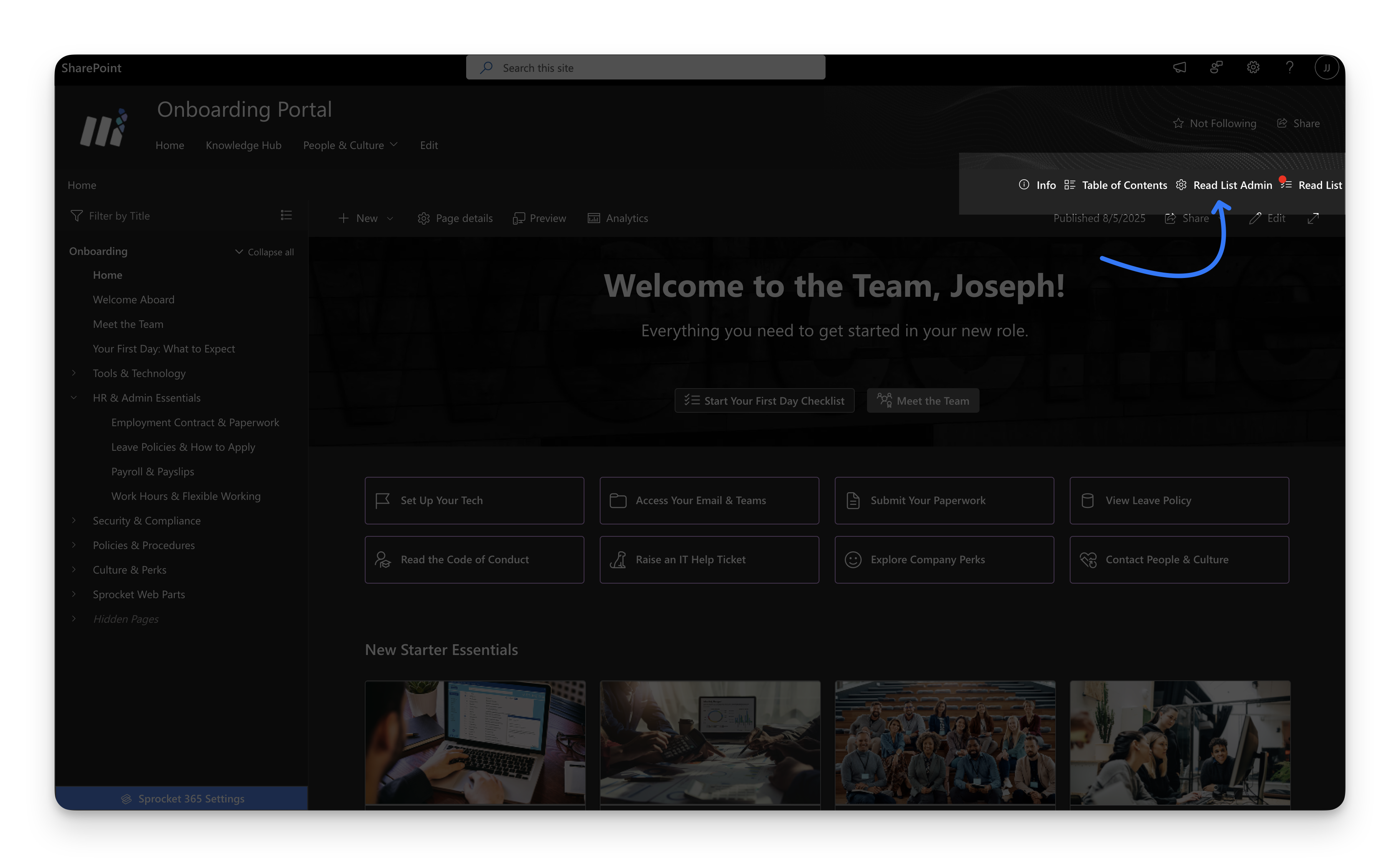
- Open a Knowledge Hub page.
- Select Read List Admin from the Knowledge Hub action bar.
- The Read Lists admin centre opens.
Read Lists requires site administrator permissions or designated Read List admin access. Knowledge Hub must be enabled before configuring Read Lists.
Creating a Read List
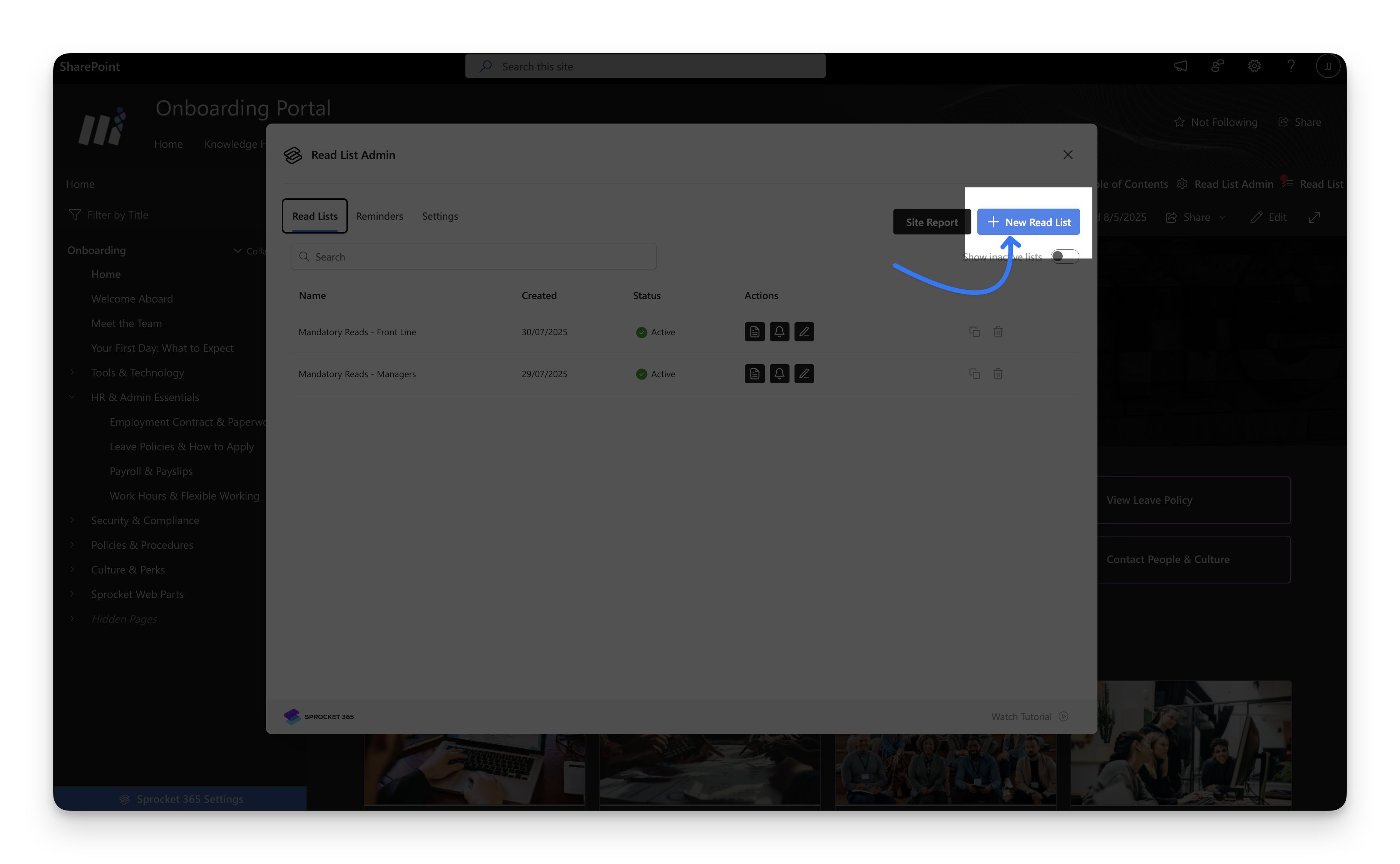
- Open the Read Lists tab.
- Select New Read List.
- Enter a clear name for the assignment.
- Select the reading items.
- Select the audience.
- Configure due dates, fresh reads, admins, and status.
- Select Save.
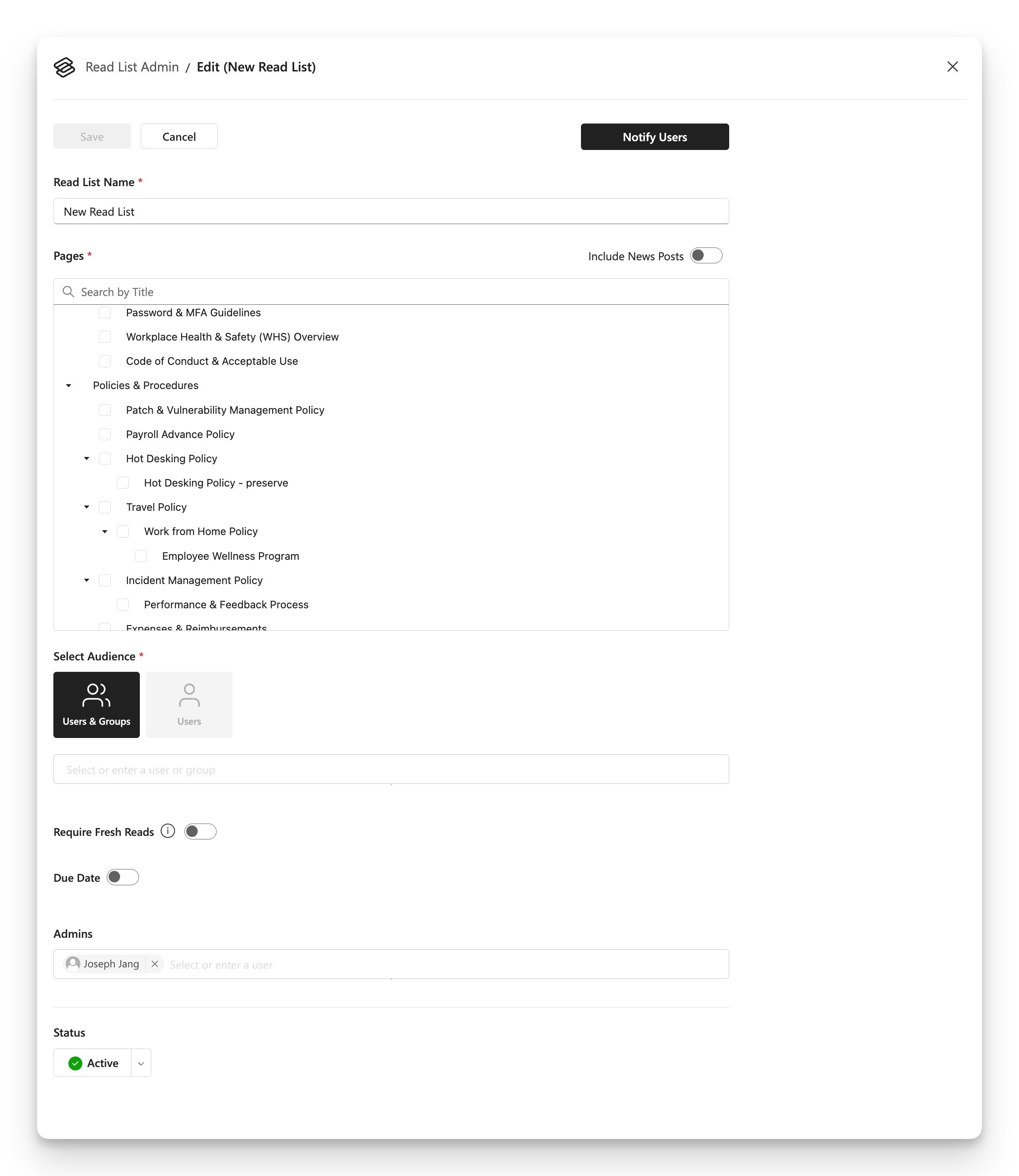
Selecting Reading Items
The Reading Items section has two tabs: Pages and Files.
Pages
Use the Pages tab to select Knowledge Hub pages. You can also include SharePoint news posts when Include News Posts is enabled.
Use Show selected only when you want to review only the items already included in the Read List.
Files
Use the Files tab to select files from visible document libraries in the current site. Files are shown in a library and folder tree, and only individual files can be selected.
Use the file search to find files by title. If no files are available, the picker will show No files found.
Supported assigned files include common SharePoint file types such as Word, PowerPoint, Excel, PDF, images, videos, audio files, markdown, and text files. Users can preview supported files in the reading viewer, or open the file directly when a preview is not available.
Assignment Settings
| Setting | Description |
|---|---|
| Select Audience | Choose whether the Read List is assigned to users only or to users and Microsoft 365 groups. |
| Audience | Select the users or Microsoft 365 groups who need to complete the reading. |
| Require Fresh Reads | Ask users to read the selected items again, even if they completed them previously. |
| Items must be read after | Sets the date used for fresh-read compliance. Reads before this date do not count. |
| Due Date | Adds a due date to the assigned items. |
| Admins | Adds users who can help manage the Read List. |
| Status | Set the Read List to Active or Inactive. |
Audience Selection
Read Lists support individual users and Microsoft 365 groups.
Microsoft 365 groups are also known as Unified Groups or Office 365 Groups. When a Microsoft 365 group is selected, members of that group are assigned to the Read List.
The following group types are not supported:
- Security groups
- Distribution lists
- Mail-enabled security groups
- SharePoint groups
If you need to assign reading to people in one of those groups, add the users individually or create a Microsoft 365 group with the required members.
Editing and Cloning Read Lists
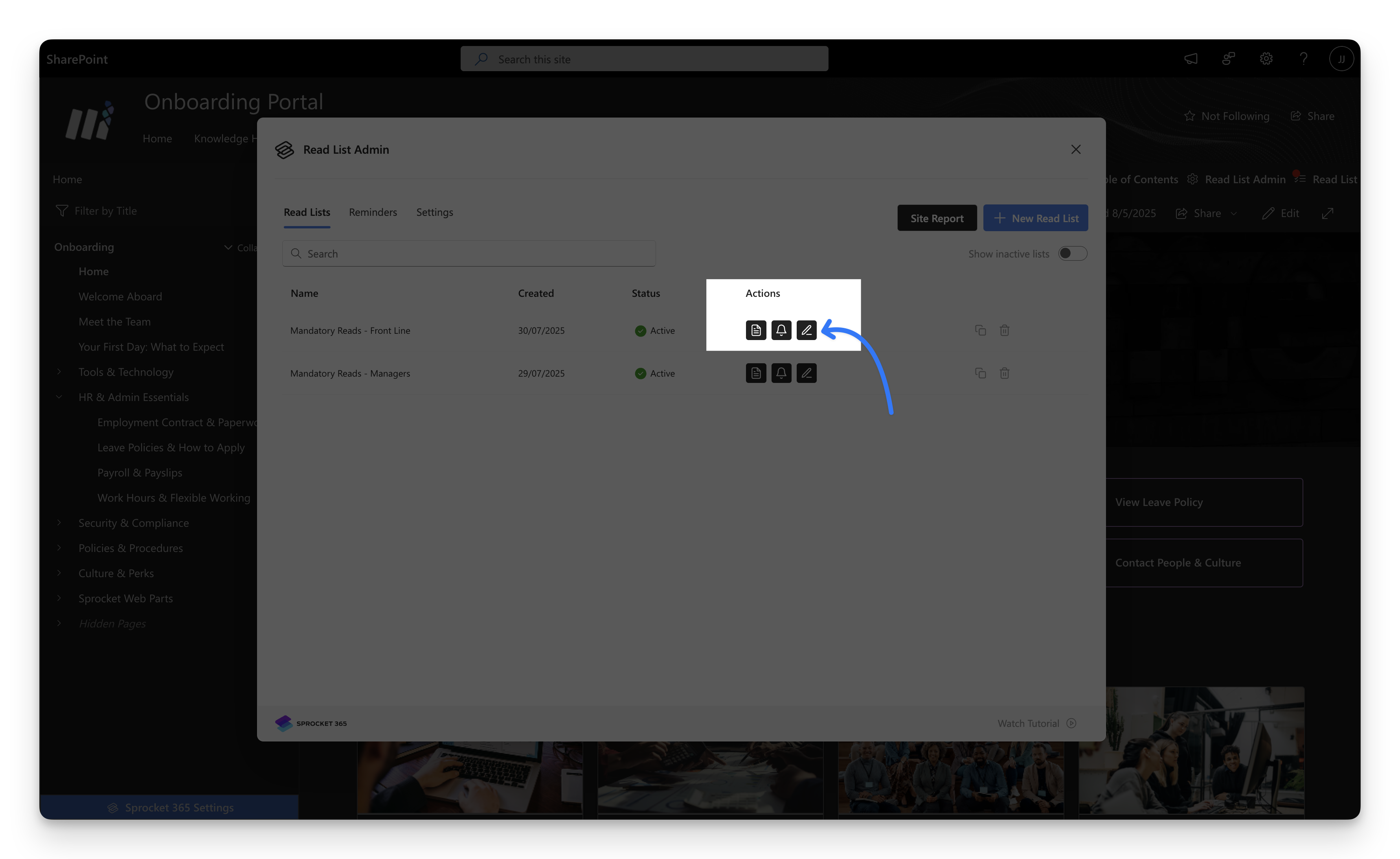
Use Edit to update an existing Read List. You can change the reading items, audience, due dates, admins, or status.
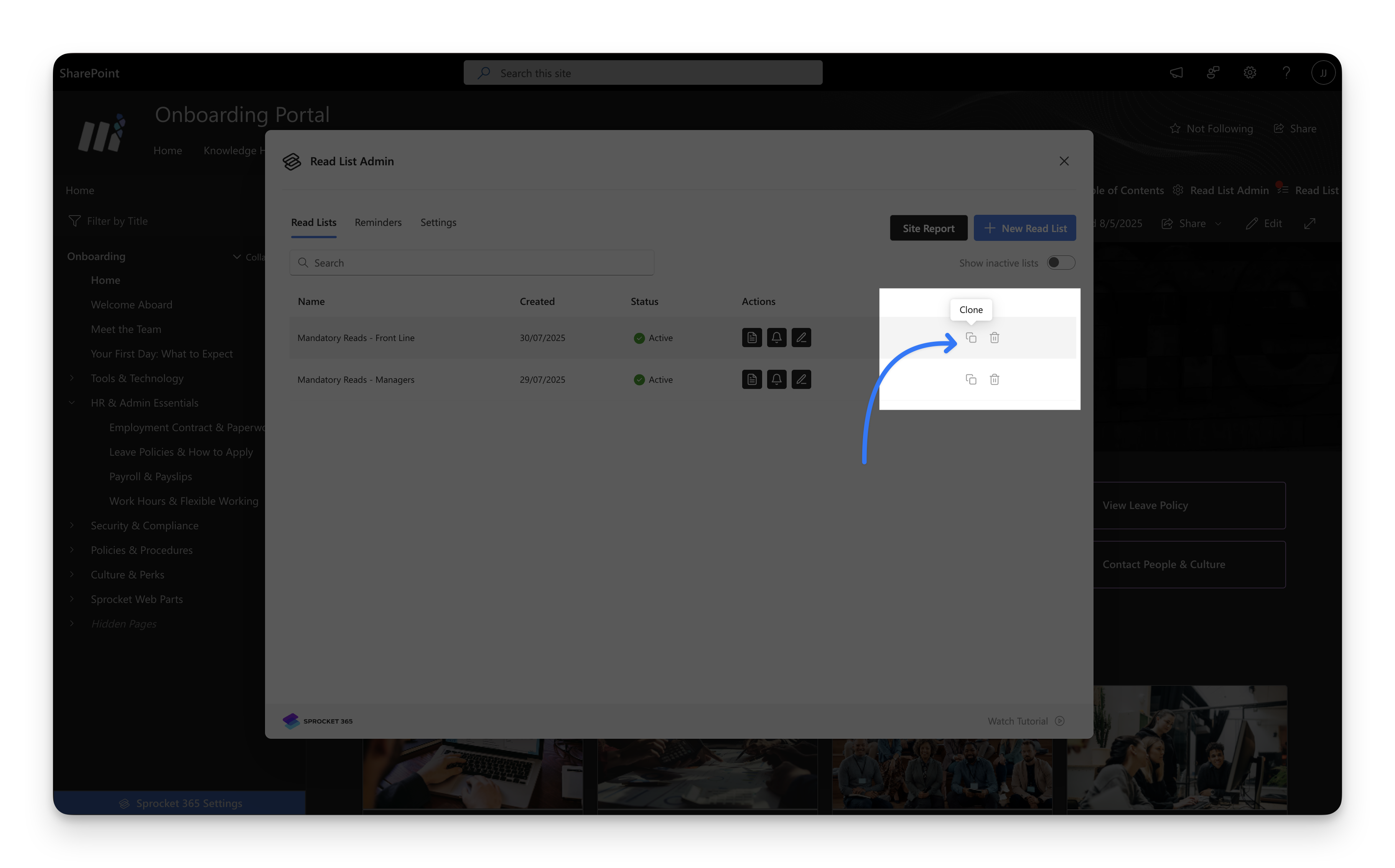
Use Clone when you want to duplicate an existing Read List and adjust it for a new audience, policy, campaign, or reporting period.
User Experience
Users see assigned reading in Knowledge Hub and in the Read Checklist web part.
- Pages open as SharePoint pages.
- Files open in the Sprocket reading viewer.
- File previews are shown where supported.
- Users select Mark as Read when they have finished reading a file.
- Completed items show as read with a completion date.
Reporting
Read List Report
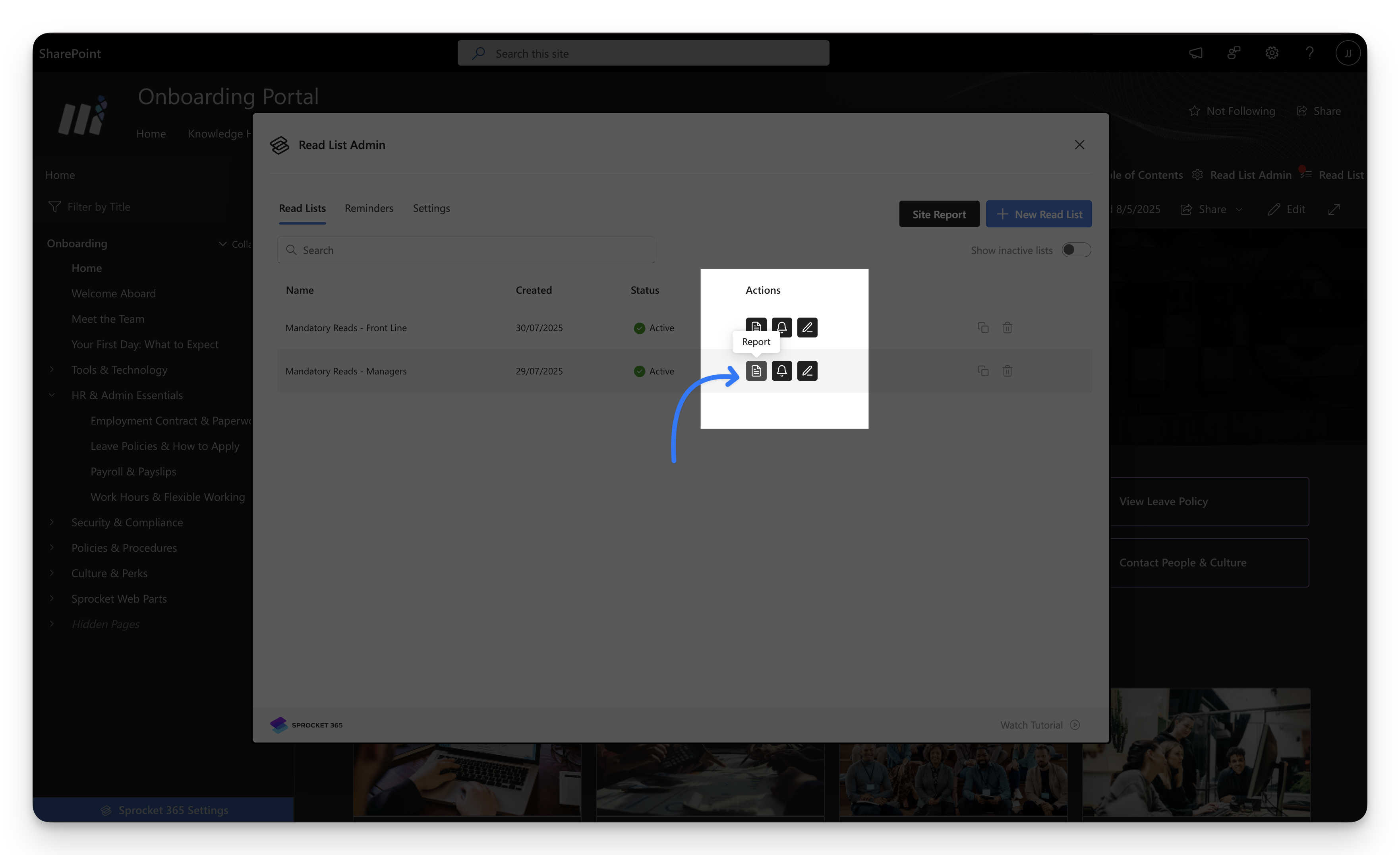
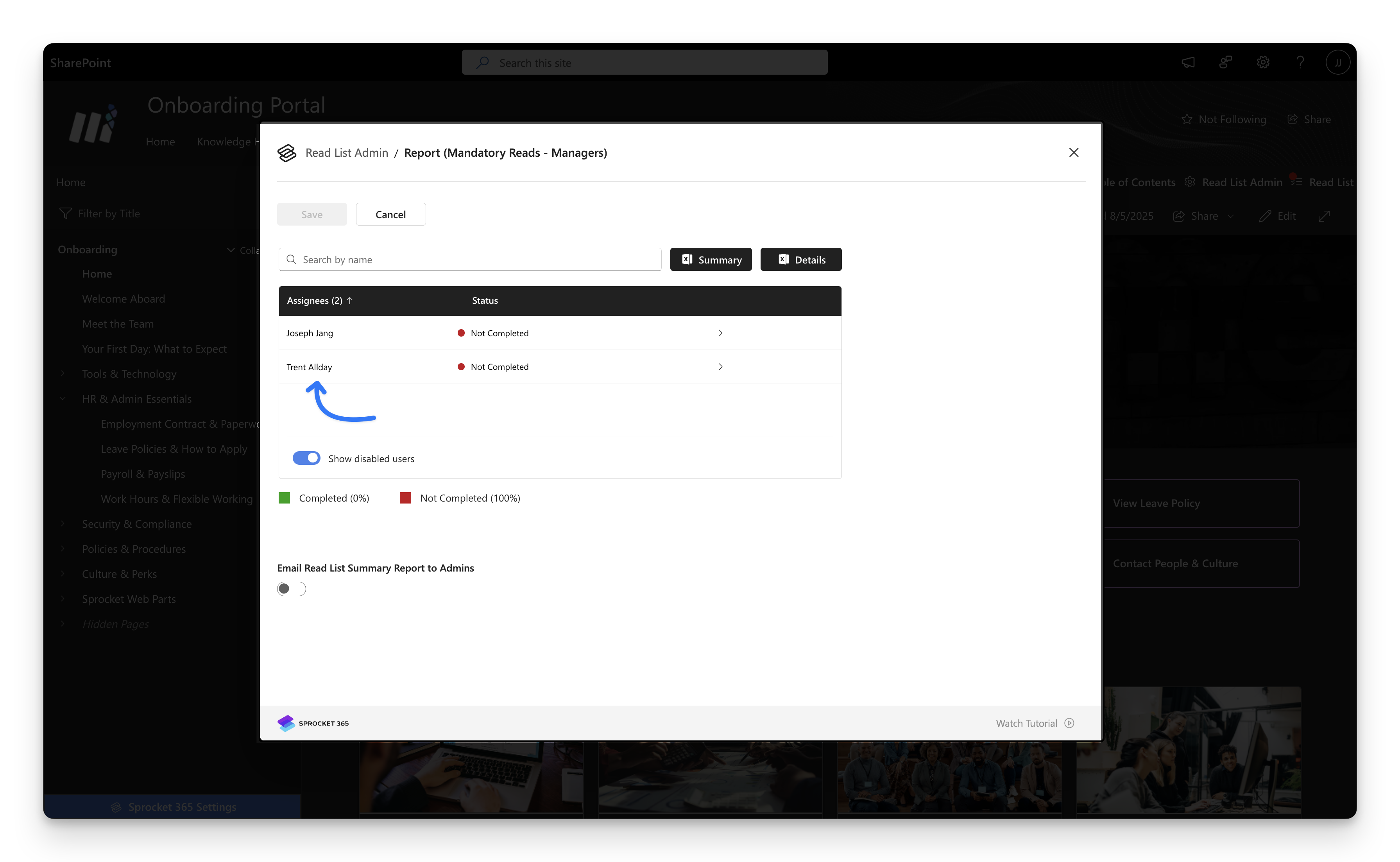
Select Report on a Read List to view completion status for the assigned audience. The report shows who has completed the reading and who still has outstanding items.
Select an assignee to view item-level progress, including which pages or files have been completed.
Exporting Reports
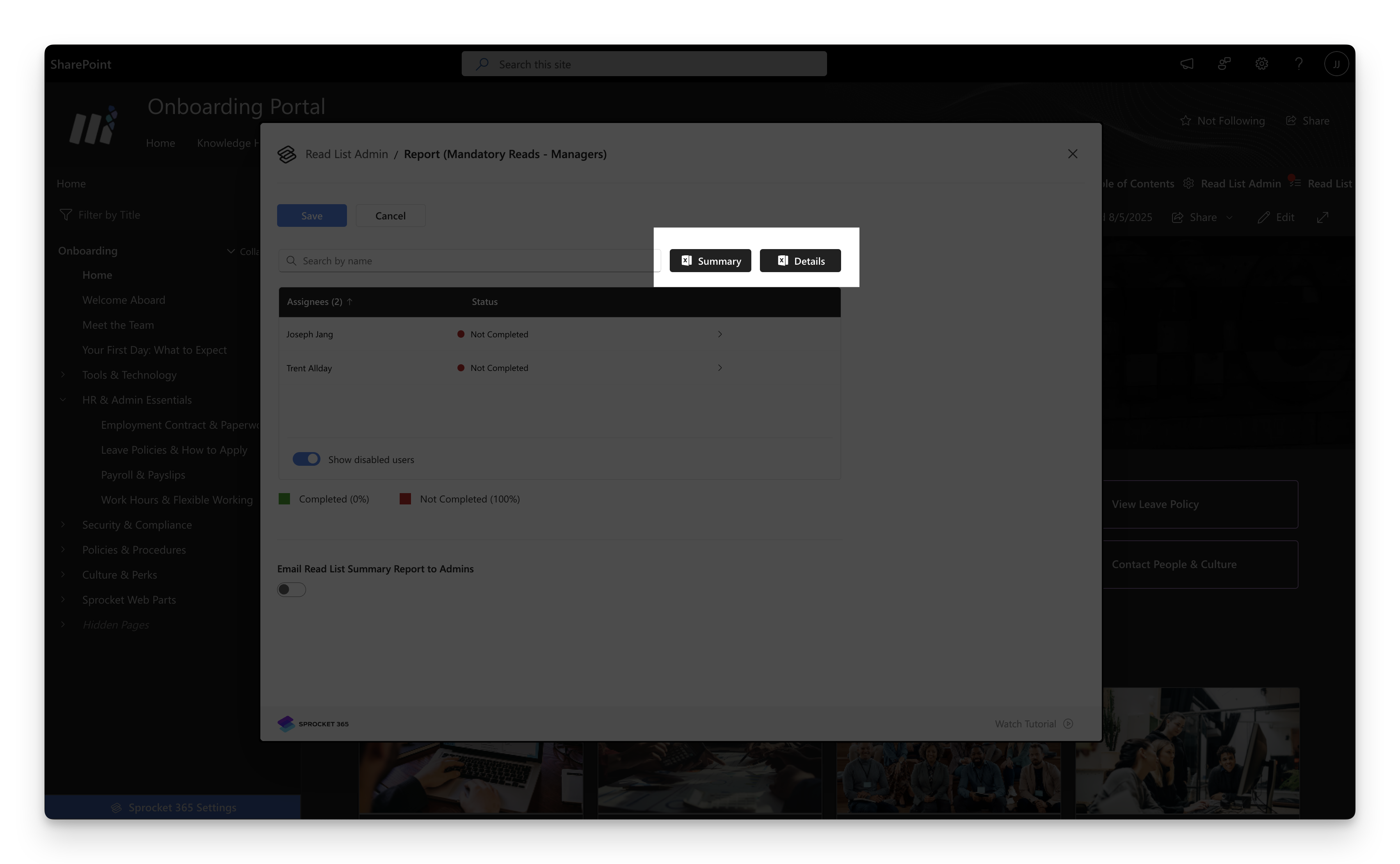
Use the report export buttons to download compliance data.
- Summary provides user-level completion status.
- Details provides item-level completion status for each assigned page or file.
Site Report
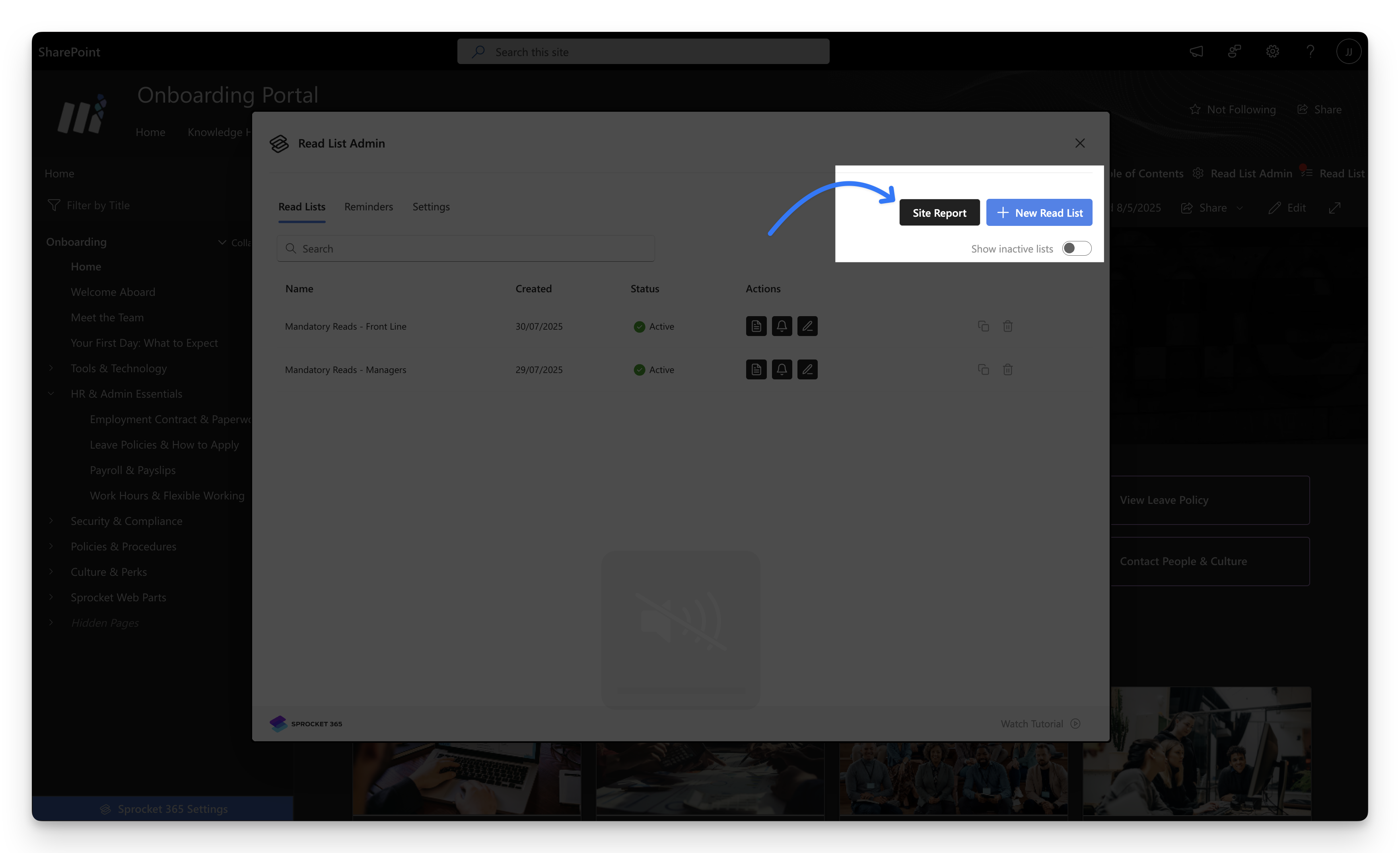
The Site Report shows completion data across Read Lists in the current SharePoint site. Use it when you need a broader view of reading compliance across multiple assignments.
Notifications and Reminders
Notify Users
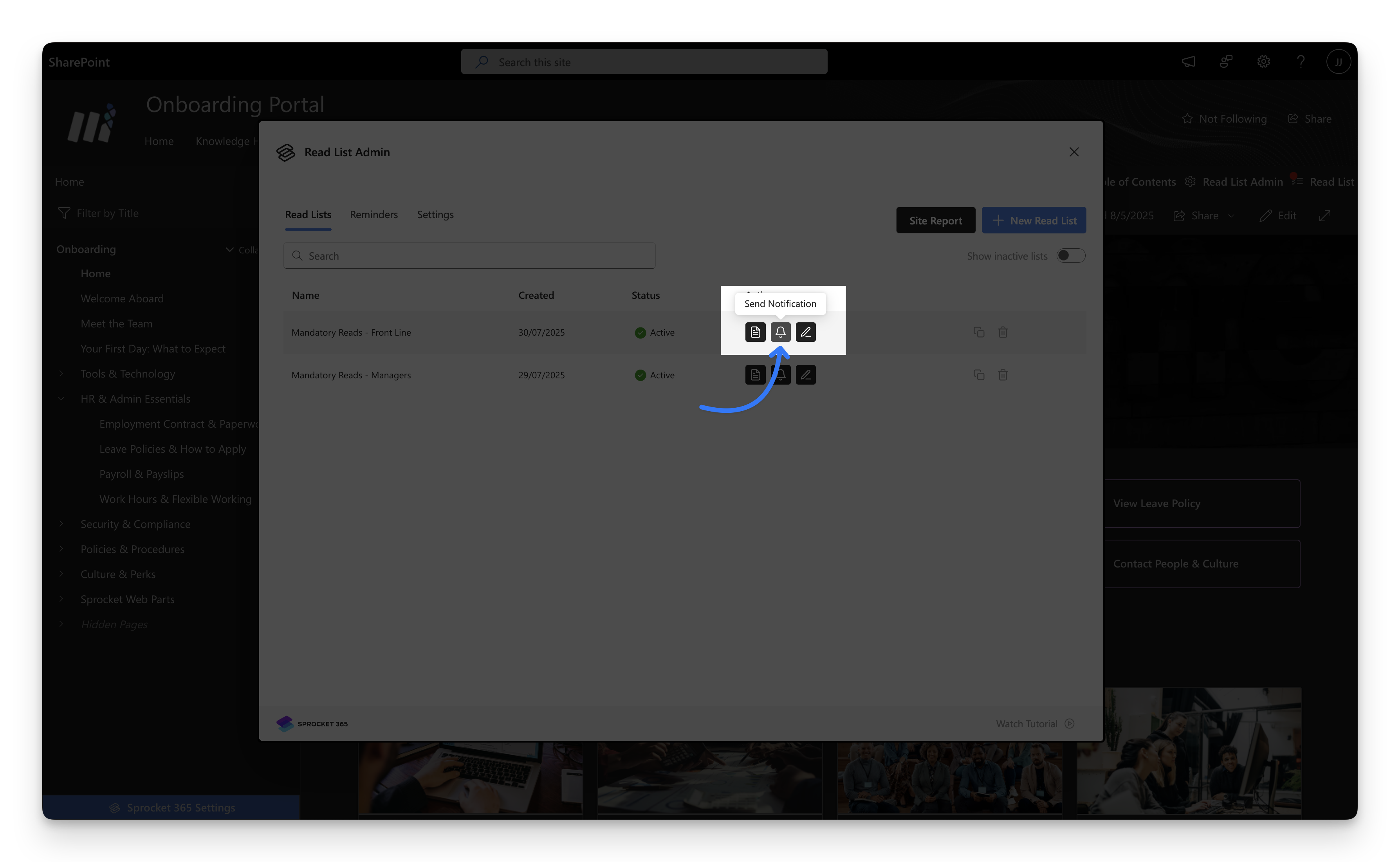
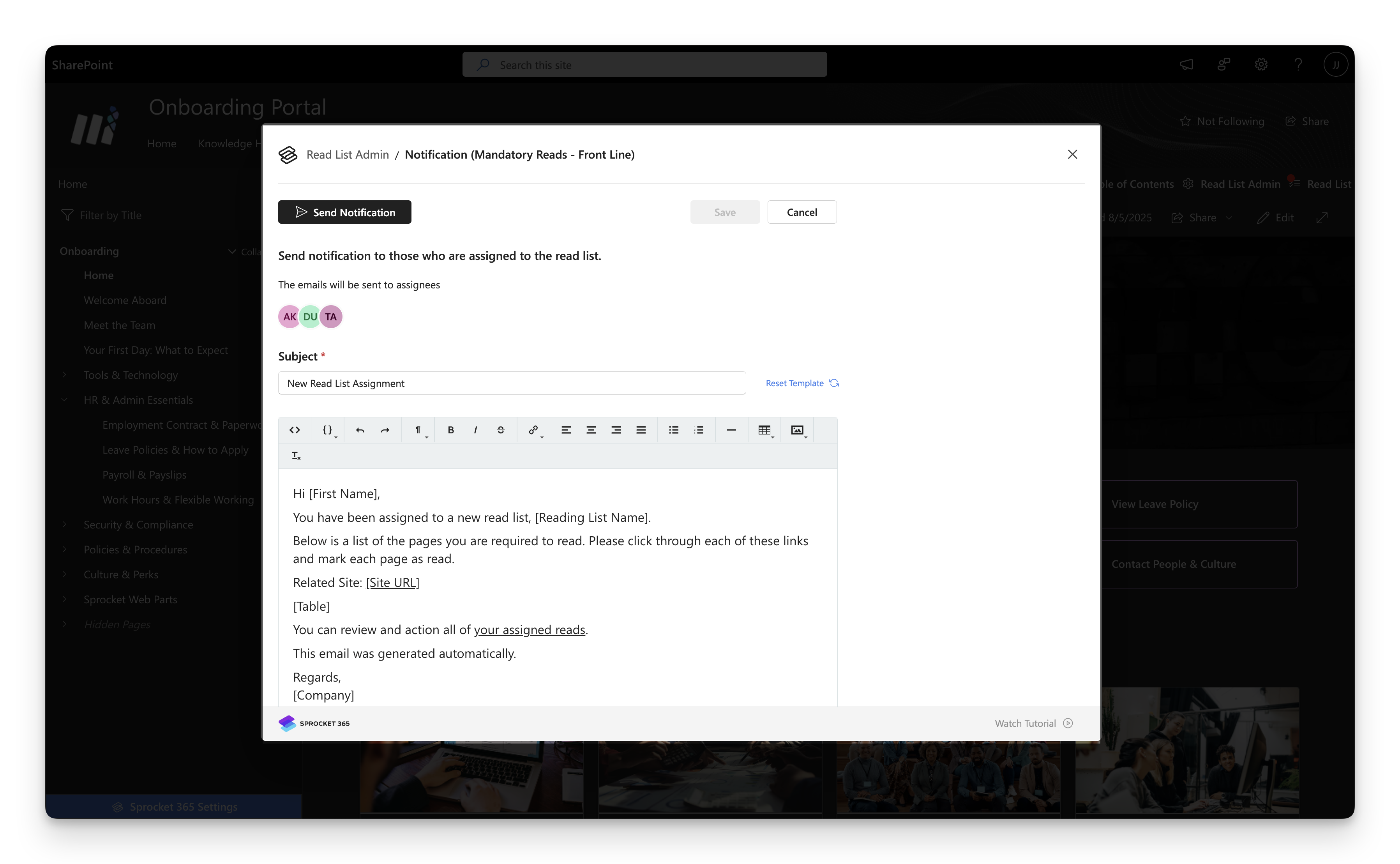
Use Notify Users to send an email notification to the assigned audience. You can customise the email content before sending.
Remind Users to Complete Reading
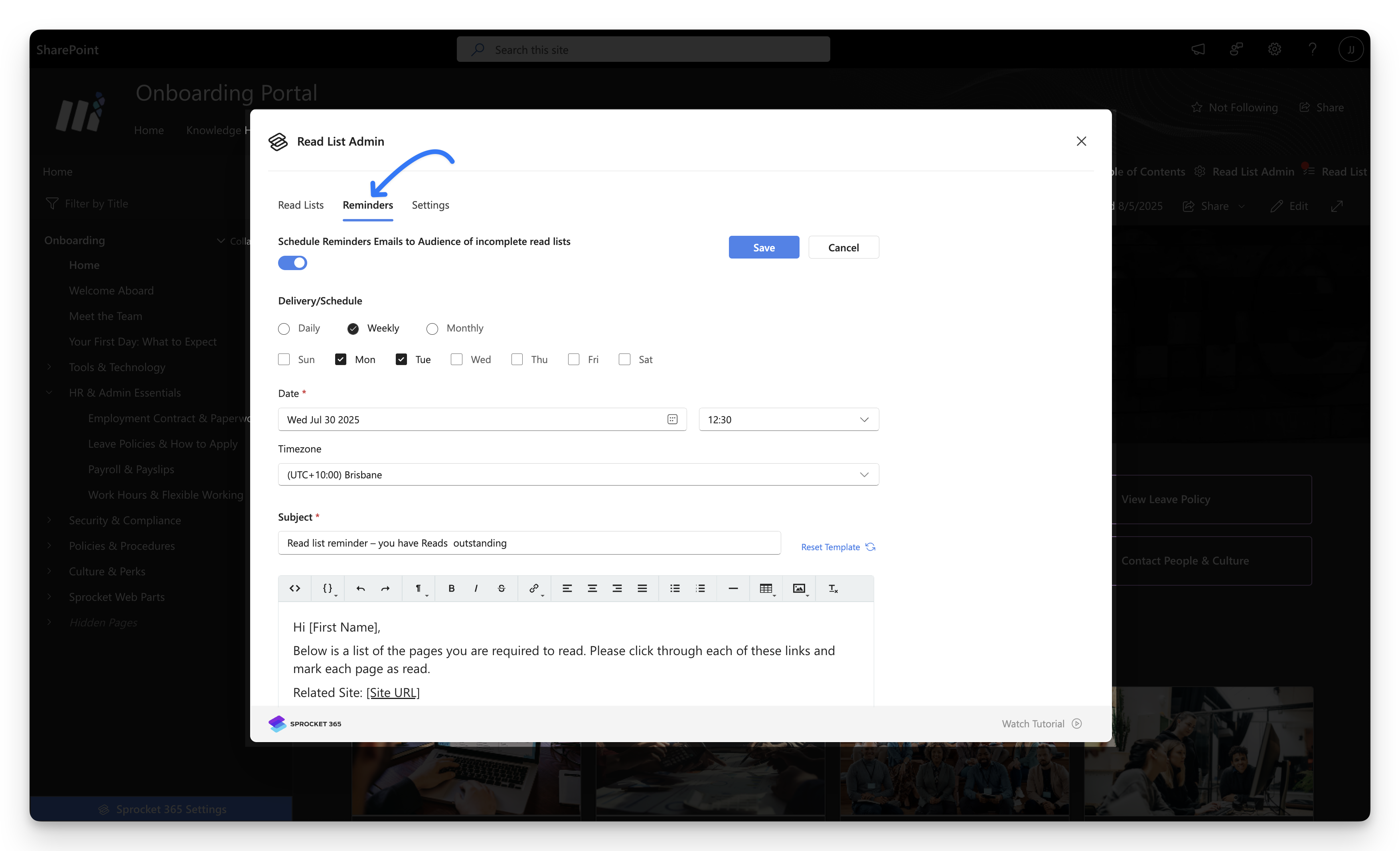
Use reminders to send scheduled emails to users who have not completed their assigned reading. You can choose the schedule, start date, timezone, subject, and email content.
Email Summary Reports to Admins
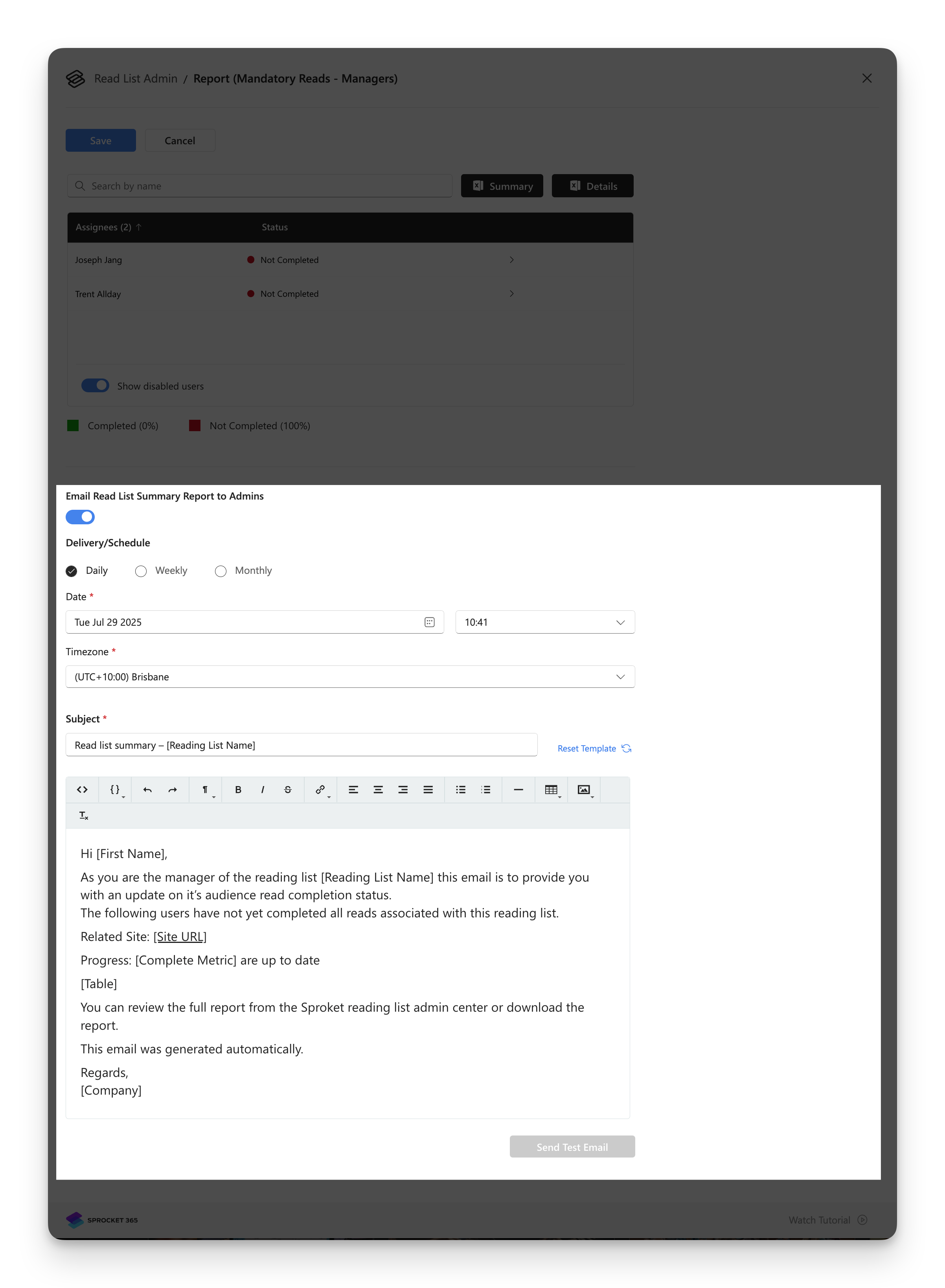
On the report page, enable Email Read List Summary Report to Admins to schedule summary emails for Read List administrators.
Admin Consent for Reminder Emails
You no longer need to grant separate admin consent just to create and use Read Lists.
Admin consent is only prompted when reminder email features are enabled and the required app registration has not already been approved. When consent is needed, Sprocket shows a warning with a Grant Admin Consent link.
If reminders are not enabled, you can create, edit, and report on Read Lists without completing this reminder-email consent step.
Additional Settings
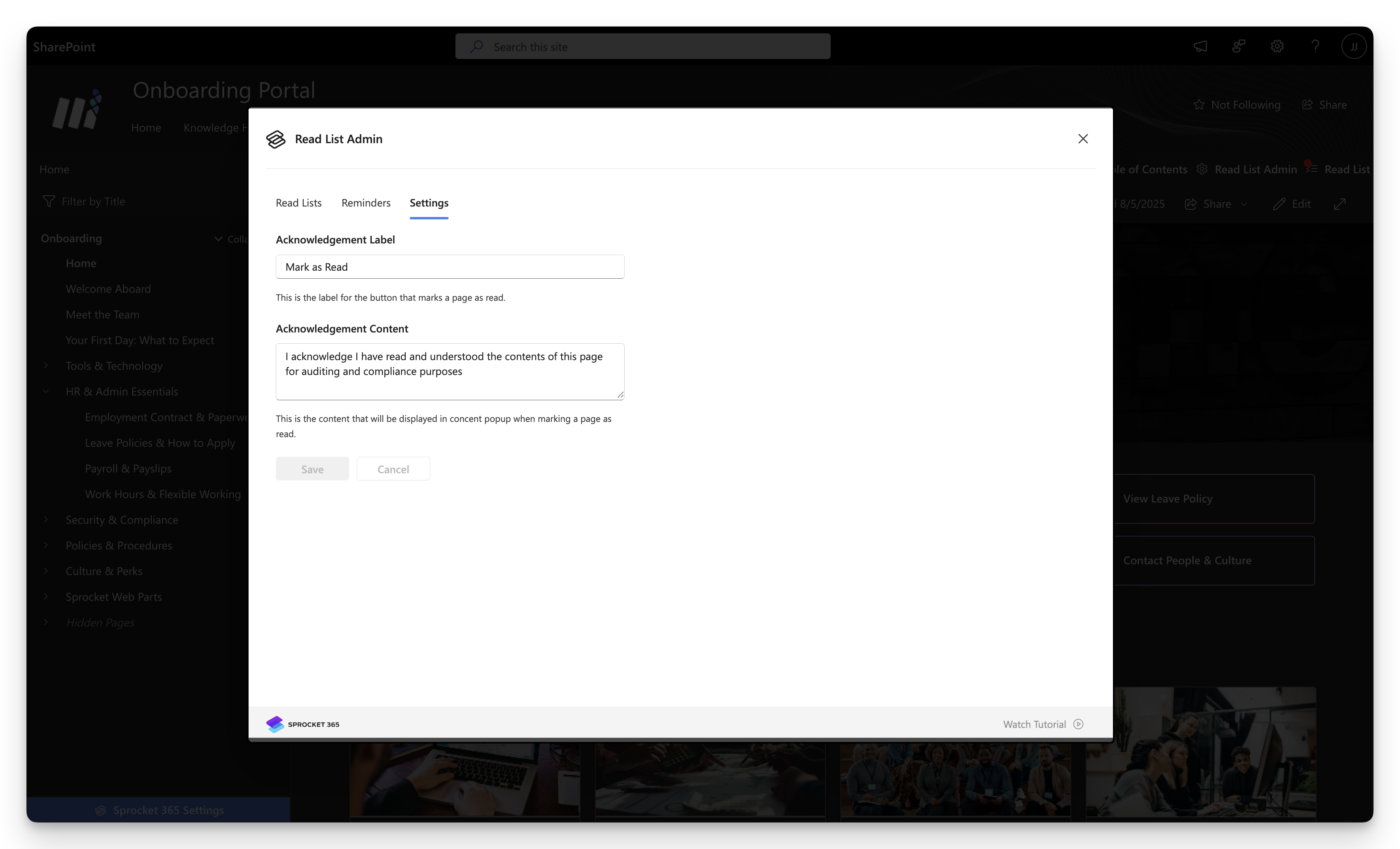
The Settings tab controls global Read List interface text, including:
| Setting | Description |
|---|---|
| Acknowledgement Label | Button text shown when users mark an item as read. |
| Acknowledgement Content | Confirmation text shown before users mark an item as read. |
These settings apply across Read Lists and the Read Checklist experience.
FAQs
Can a Read List include files as well as pages?
Yes. Use the Pages tab for Knowledge Hub pages and the Files tab for files from document libraries.
Can I select an entire folder or document library?
No. Select the individual files that users need to read.
What happens if a file cannot be previewed?
Users can still open the file directly if they have permission to access it.
Do users need access to the pages and files?
Yes. Read Lists track assignments, but SharePoint permissions still control whether a user can open the page or file.
Do I need admin consent before creating Read Lists?
No. Admin consent is only prompted for reminder email features when the required app registration has not already been approved.